Redesign the look and feel
Implement Salesforce Pardot integration

Salesforce Pardot

Modernized, scalable ecosystem that communicates the company’s brand mission and values
The Challenge: Unifying B2B and B2C Experiences
Imagine managing two distinct websites with completely different audiences. This was the exciting challenge that a leading company in the potato industry brought to us. Previously, they operated one site for the restaurant business (B2B) and another for the final consumer (B2C). Consequently, the brand lacked a unified digital image.
To solve this, our team focused on two main goals. First, we needed to bring these two worlds together into a single, cohesive platform. Second, we aimed to completely redesign their “look and feel” to create a modern brand identity.
Integrating Salesforce Pardot for Marketing Automation
Beyond the visual update, the project required a deep Salesforce Pardot integration. By doing so, the company can now track user behavior across both B2B and B2C segments. Specifically, the new website features clearly separated areas for each audience, yet they both share a consistent and professional image.
In addition, we dedicated a special section of the website to communicate the company’s brand mission and core values. Ultimately, this integration transforms the website into a powerful marketing tool that nurtures leads and strengthens customer trust.
Strategic Planning: Defining the Information Architecture
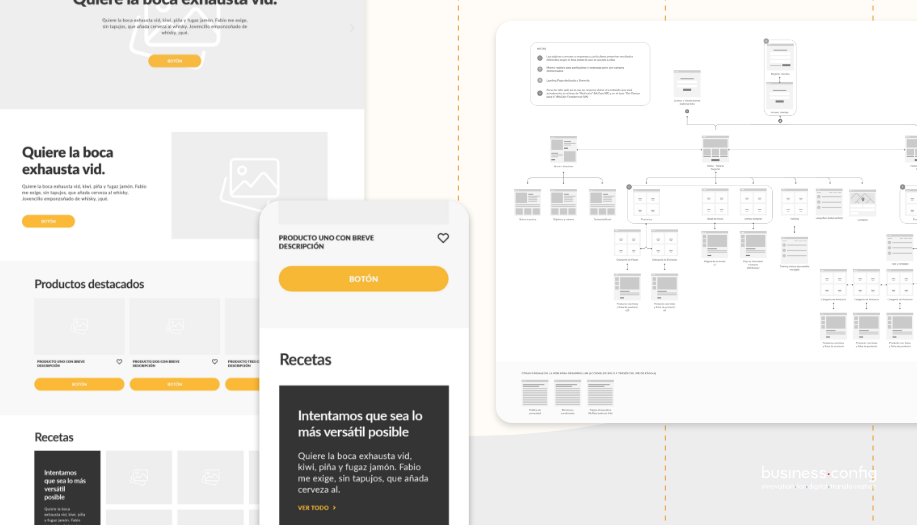
Where to start? At the beginning of the project, our team focused on studying the content of both existing websites. Simultaneously, we worked closely with the client to understand which elements were most relevant and which should be removed. By doing so, we were able to create a new sitemap and wireframes that perfectly serve each target audience.
To simplify the user experience, we designed a top bar with three clear navigation buttons:
-
Para tu negocio (B2B)
-
Para tu casa (B2C)
-
Nosotros
Furthermore, both areas required detailed product content and the ability to support future online sales. Therefore, we built the website using WooCommerce. This choice ensures the entire platform is ready to launch an online store whenever the company is ready to scale.
A New Visual Identity: Balancing Consistency and Distinction
Regarding the design, our UI team faced the challenge of creating a unified image for both areas. However, the two sections still needed to be easily distinguishable from each other. To achieve this, we conducted a thorough study of the brand’s existing manuals and analyzed all websites within the brand’s universe. Ultimately, this research allowed us to build a fresh, “new look” that respects the company’s heritage while modernizing its digital presence.
Design Consistency: Using Color to Differentiate Segments
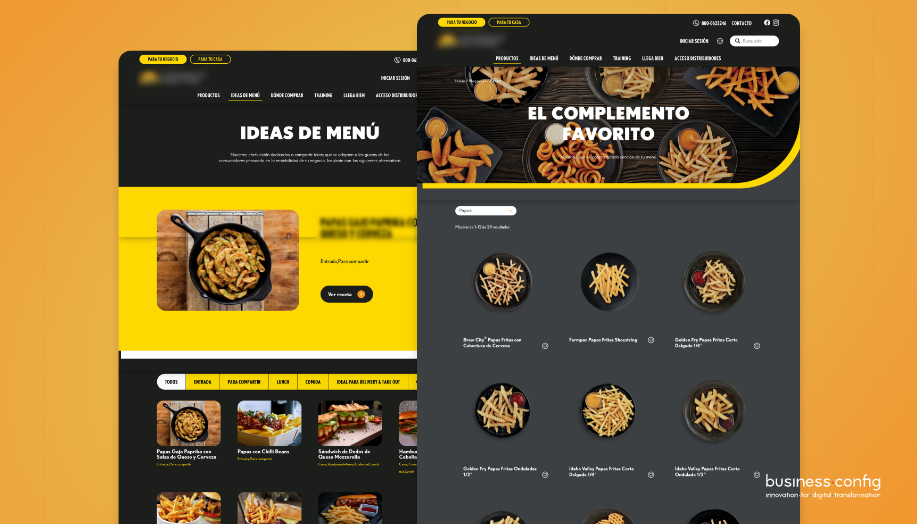
To maintain brand harmony, we used the same structure for both areas of the website. Specifically, we organized the information and products in a similar way across the entire platform. Moreover, using the same font and button formats helped us form a coherent and professional image.
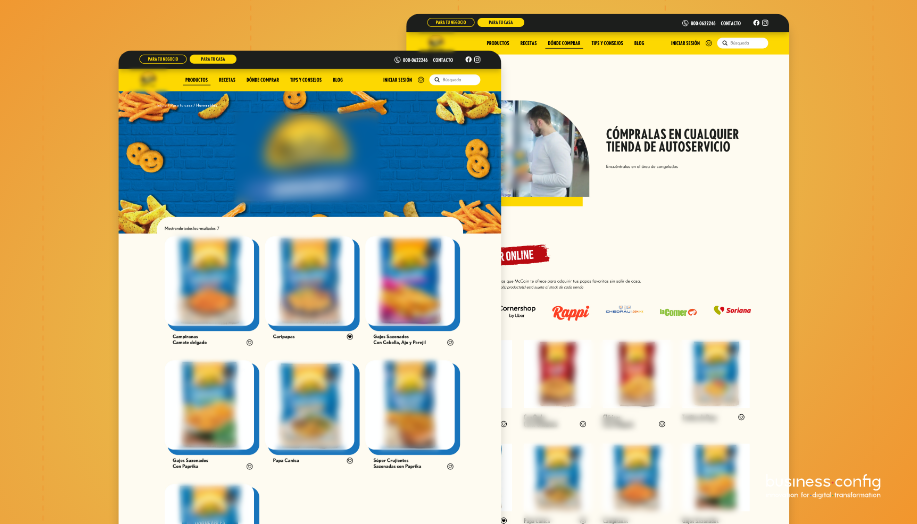
However, we created a clear distinction between the segments through a strategic use of color. For the B2B segment, our team chose darker tones like black and gray to convey authority. In contrast, we applied lighter colors such as beige and orange for the B2C segment to create a more welcoming feel. Finally, we used yellow as a unifying color to link both sections together seamlessly.
Strategic Lead Acquisition: WordPress and Salesforce Pardot
Lead acquisition was a vital goal for this project. To achieve this, our team redesigned the contact forms in both sections of the website. Specifically, we added a custom feature to the B2B section. Now, users can find products and distributors by entering their Postal Code. Immediately after, the system redirects them to the corresponding salesperson.
Our developers integrated these custom-made forms with the Salesforce Pardot platform. Since the brand uses this tool globally, maintaining a seamless connection was essential.
Why Connect Pardot with WordPress?
By integrating Pardot with WordPress, we provided several strategic advantages for the client:
-
Personalization: We improved the end-user experience through advanced customization.
-
Dynamic Content: The team can now easily add forms and content using WordPress text regions and widgets.
-
Deep Analytics: The campaign tracking code allows the client to monitor the activity of potential customers and site visitors in real-time.

Conclusion: Delivering Excellence Through Innovation
In summary, this was a challenging project from start to finish. However, the effort resulted in a high-quality product that made everyone happy. Ultimately, we take great pride in delivering solutions that truly transform our clients’ digital presence.
If this type of integration makes sense for your business, we are ready to help. Contact us today, and let’s develop the next innovative solution together!